Friday, February 24, 2006

Ted Koppel Catches Bush Using a Three Letter Word

The three letter word "O-I-L" has been missing from virtually all discussions of the war in Iraq. Yet would the war have happened anywhere outside of the oil-rich Middle East?

Does demonizing those who mention the three letter word help or hurt us as a nation trying to figure out what next to do?

Below Ted Koppel takes President Bush to task for demonizing as dishonest those who mention OIL. Then he gives the President a much needed history lesson about U.S. foreign policy and oil since the end of WWII.

Anti-Demonizer of the Month
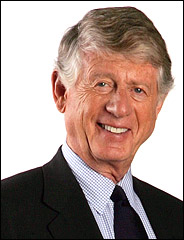
*Thank you Ted Koppel!*

**You get the Anti-Demonizer of the Month Award for February 2006**

-----------------
New York Times
February 24, 2006

Will Fight for Oil

By TED KOPPEL

The American people ... know the difference between honest critics who question the way the war is being prosecuted and partisan critics who claim that we acted in Iraq because of oil, or because of Israel, or because we misled the American people.
— President Bush, Jan. 10 Washington

Let us, as lawyers say, stipulate that the Bush administration was genuinely concerned that weapons of mass destruction, which they firmly believed to be in Saddam Hussein's arsenal, might be shared with the same Qaeda leadership that planned the horrific events of 9/11. That would have been a reasonable motive for invading Iraq; but surely now, three years later, when the existence of those weapons is no longer an issue, it would be insufficient reason for the United States to remain there.

Let us further acknowledge that continuing to put American lives at risk in Iraq purely for the protection of Israel would arouse, in some quarters, anti-Semitic murmurs, if not growls.
But the Bush administration's touchiness about charges that we acted — and are still acting — in Iraq "because of oil"? Now that's curious. Keeping oil flowing out of the Persian Gulf and through the Strait of Hormuz has been bedrock American foreign policy for more than a half-century.
Fifty-three years ago, British and American intelligence officers conspired to help bring about the overthrow of Iran's prime minister, Mohammed Mossadegh. Mossadegh's shortcomings, in the eyes of Whitehall and the State Department, were an unseemly affinity for the Tudeh Party (the Iranian Communists) and his plans to nationalize the Iranian oil industry. The prospect of the British oil industry being forced to give way to Soviet influence over the Iranian oil spigot called for drastic action. Following a military coup, Mossadegh was arrested, imprisoned for three years and then held under house arrest until his death in 1967. Power was then effectively concentrated in the hands of Shah Mohammed Reza Pahlavi.

The shah's unswerving commitment to the free flow and marketing of Iranian oil would, by the end of the 1960's, become a central pillar of the so-called Nixon Doctrine, in which American allies were tapped to be regional surrogates to maintain peace and security. The sales of sophisticated American weapons to Iran served the twin purposes of sopping up billions of what came to be known as "petro-dollars," while equipping (in particular) the shah's air force.
That reliance on Iran to maintain stability in the Persian Gulf enjoyed bipartisan support. On New Year's Eve in 1977, President Jimmy Carter, visiting the shah in Tehran, toasted his great leadership, which he said had made Iran "an island of stability in one of the more troubled areas in the world." By January 1980, after Ayatollah Ruhollah Khomeini had driven the shah from the Peacock Throne, President Carter made absolutely clear in his final State of the Union address that one aspect of our foreign policy remained unchanged:
"An attempt by any outside force to gain control of the Persian Gulf region will be regarded as an assault on the vital interests of the United States of America, and such an assault will be repelled by any means necessary, including military force."

The Reagan administration announced its intention to continue defending the free flow of Middle East oil, by whatever means necessary. In March 1981, Defense Secretary Casper Weinberger clearly signaled that the United States was seeking a new base of operations in the Persian Gulf:
"We need some facilities and additional men and materiel there or nearby, to act as a deterrent to any Soviet hopes of seizing the oil fields or interdicting the line."

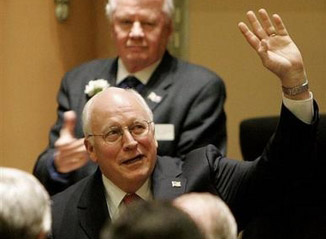
Subsequently, the United States began establishing military bases in Saudi Arabia and, to much criticism, selling Awacs aircraft to the Saudi government. In 1990, when Saddam Hussein appeared likely to follow his invasion of Kuwait by crossing into Saudi Arabia, the defense secretary at the time, Dick Cheney, laid out Washington's concerns:

"We're there because the fact of the matter is that part of the world controls the world supply of oil, and whoever controls the supply of oil, especially if it were a man like Saddam Hussein, with a large army and sophisticated weapons, would have a stranglehold on the American economy and on — indeed on the world economy."

What Mr. Cheney said was correct then and remains correct now. The world's oil producers pump approximately 80 million barrels a day. The world's oil consumers, joined today by an increasingly oil-hungry India and China, purchase 80 million barrels a day. Were production from the Persian Gulf to be disrupted because of civil war in Iraq, the freezing of Iranian sales or political instability in Saudi Arabia, the global supply would be diminished. The impact on the American economy and, indeed, on the world economy would be as devastating today as in 1990.

If those considerations did not enter into the Bush administration's calculations when the president ordered the invasion of Iraq in 2003, it would have been the first time in more than 50 years that the uninterrupted flow of Persian Gulf oil was not a central element of American foreign policy.

That is not to say that the United States invaded Iraq to take over its oil supply. But the construction of American military bases inside Iraq, bases that can be maintained long after the bulk of our military forces are ultimately withdrawn, will serve to replace the bases that the United States has lost in Saudi Arabia. There may be other national security reasons that the United States cannot now precipitously withdraw its forces from Iraq, including the danger that the country would become a regional terrorist base; but none is greater than forestalling the ensuing power vacuum and regional instability, and the impact this would have on oil production.

H. L. Mencken is said to have noted that "when someone says it's not about the money — it's about the money." Arguing in support of his fellow Arkansan during Bill Clinton's impeachment trial, former Senator Dale Bumpers offered a variation on that theme: "When someone says it's not about the sex — it's about the sex."

Perhaps the day will come when the United States is no longer addicted to imported oil; but that day is still many years off. For now, the reason for America's rapt attention to the security of the Persian Gulf is what it has always been. It's about the oil.
Ted Koppel, who retired as anchor and managing editor of the ABC program "Nightline" in November, is a contributing columnist for The Times and managing editor of the Discovery Channel.

Sunday, February 19, 2006

Michael Moore Accuses Cheney of Boozing

But the Articles He Cites Don't Support the Charge.


******************************
A Quail's Tale By Michael Moore?
******************************
Cheney takes no questions, gets ovation from hand-picked, hometown audience after drinking beer, shooting friend in face.

*****************************************************
On his website Michael Moore leaves the impression that Dick Cheney was drinking it up before accidentally shooting his friend on a recent hunting trip. The stories linked to the Moore headlines don't corroborate Moore's sensationalism. In any case, is Moore's real beef with Cheney the Veep's personal character, or his political agenda?
*****************************************************

He Shoulda Had a V8 or two; Cheney admits to boozing prior to shooting friend in the face
Scott McClellan Refuses to Deny Dick Cheney's Boozing Sheriff's Deputies Failed to Administer Alcohol Test Alcohol Was the First Thing On Whittington's Mind Finger on the Trigger of America


Sunday, January 01, 2006

O'Reilly's New Year's Resolution: Everyone Should Stop the Smearing--Except Him

I'm not sure Bill O'Reilly's New Year's Resolution constitutes demonization exactly. Still, it shows the kind of sanctimonious mindset that succumbs to demonizing temptations: an inability to see that you do exactly the thing you most hate in those you disagree with.

First, some selections from his resolutions, and then a little commentary.


Bill's New Year's Resolution:

Hi, I'm Bill O'Reilly. Thank you for watching us tonight. I'll be taking a few days off to celebrate Christmas. So this evening's "Talking Points Memo" will be "The Factor's" resolutions for the New Year. . . .

We resolve to hold prominent people accountable when they smear others. That simply has to stop. But karma is kicking in. For example, left wing zealot George Clooney ran around smearing me to try to bring attention to his movies this season. It didn't work. Fewer than four million Americans went to see his first film. And the second one is shaping up to be a big box office bomb. Now Clooney's a talented guy. He's making a huge mistake using smear tactics.

And speaking of disasters, our competitor at MSNBC is a notorious smear merchant. So far this month, December, "The Factor's" third rerun at 4:00 in the morning has beaten the MSNBC's original 8:00 program more than 50 percent of the time. Unbelievable.

"Talking Points" resolves to keep the pressure on the Bush administration to secure the borders because we believe this is a life/death situation.

We resolve to continue watching the ACLU, the nation's most dangerous organization.

Finally, we resolve in our 10th year to continue bringing you an honest broadcast that is not afraid of anyone.

Commentary:

Bill--look at your own show and at Fox News--and then consider this as your New Year's Resolution: Do unto others as you would have others do unto you.

And Bill: since you resolve that your show will continue fearlessly not to be "afraid of anyone" why don't you be not afraid of the Bush/Cheney/Rumsfeld crowd for a change, on some issue other than politically safe immigration bashing, and give the liberal-left powerhouse that is in charge of no branch of government or business a Christmas break?


For all of O'Reilly's resolutions click here.

Wednesday, December 07, 2005

Rush: Dems Against Anything Good for America

Rush Limbaugh claims:

". . . I think the Democrats are telling us exactly who they are.

They are anti-war. They are anti-military, anti-victory, and anything good that happens in this country, folks, is not going to help them the way they've positioned themselves. I mean, how would you...? Who is the brain that put this party in this position? If you were in politics, how would you like this position? The only way that you benefit is if the country is in misery. The only way you benefit is if we lose in Iraq, we lose everywhere we go, we have soup lines, constant national disasters, natural disasters, everything going to hell in a hand basket. That's what it takes for you to win. Who is the wizard that constructed this party in this way? They're all doing it together because that's how they view the future. They look at things and see doom and gloom. In fact, liberalism is a doom and gloom PsyOps operation. The media is their propaganda arm. Their whole outlook is doom and gloom.

They have a PsyOps operation they've been running on this country for 50 years. Psychological operations to convince everybody that there's nothing ahead but doom and gloom, utter misery and despair, and they've got their propaganda arm, the mainstream press, to plant the stories every day. But it has resulted not in what they figured. Their triumphant return to power. In fact, they are now marginalizing themselves with people actually questioning their patriotism, not just their judgment. Questioning their sanity, questioning their real intentions
."

What about the Republicans?: "They still remain their optimistic and cheerful selves."

For the text of his full remarks see: "What Will the Left Be Left With in '06?"

Wednesday, November 30, 2005

Coulter Calls Dems "Gutless Cowards"

In an article entitled: "New Idea for the Abortion Party: Aid the Enemy," Ann Coulter wrote:

"The Democrats are giving aid and comfort to the enemy for no purpose other than giving aid and comfort to the enemy. There is no plausible explanation for the Democrats' behavior other than that they long to see U.S. troops shot, humiliated, and driven from the field of battle. They fill the airwaves with treason, but when called to vote on withdrawing troops, disavow their own public statements. These people are not only traitors, they are gutless traitors."

To read the full article, published November 23, click here.

Tuesday, November 22, 2005

Murtha the "Coward'?

The uproar arose Friday as the House debated a resolution calling for an immediate withdrawal of forces from Iraq.In scheduling the vote, Republicans were trying to embarrass Democratic critics of the war, forcing them to dissociate themselves from a call earlier in the week for a slower but still definite withdrawal. That call came from Representative John P. Murtha, Democrat of Pennsylvania, a Vietnam combat veteran who spent 37 years in the Marines and is one of the most respected military authorities in the House.In attacking the Democrats' position, Ms. Schmidt, the newest member of Congress, said she had received a call from a Marine colonel, who "asked me to send Congressman Murtha a message: that cowards cut and run, Marines never do.

The House exploded in catcalls and jeers among outraged Democrats. When debate resumed, Ms. Schmidt retracted her comments and said, "I did not intend to suggest they applied to any member," especially Mr. Murtha. Ms. Schmidt could not be reached for comment on Saturday, with voice mailboxes full at all three of her offices.

From "'Mean Jean' Goes to Washington, and Invites a Firestorm" By JASON DePARLE, New York Times. Published: November 20, 2005 - For the full NY Times article, click here.